
‘Pouring fuel into flames’: Carney-Smith plan for West Coast pipeline would run through wildfire fraught parts of BC
Indigenous communities, working class and environment pay the price of short-sighted policy decisions, experts say
Hundreds of homes have been destroyed and thousands of British Columbians have been forced to evacuate as wildfires rage through parts of the province.
Over the weekend, a massive fire in Summerland, BC created conditions that BC Wildfire Services said they had “never seen before.”
On Saturday, BC’s Minister of Emergency Management and Climate Readiness Kelly Greene declared a provincial state of emergency over the fast-moving wildfire situation in interior BC.
As of Monday morning, nearly 22,000 people were under evacuation orders across the province and more than 10,000 are under evacuation alerts. An 80 year-old woman fleeing the wildfires in Summerland is confirmed to have died as a result of the fire.
As a smokey haze covers the province, provincial and federal governments are still seeking to press forward with infrastructure projects that experts say could only exacerbate the impacts of climate change in BC.
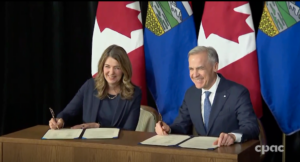
One such project, the Alberta-backed West Coast pipeline was introduced in November of last year, when the federal and Alberta government signed a memorandum of understanding, which was then submitted to the Major Projects Office last month.
The 1,250-kilometer long pipeline is expected to travel from Alberta through British Columbia to a terminal near Delta.
- Read more: ‘Ludicrous’ Alberta-Ontario Pipeline Fuels Climate Anxiety as Wildfires Rage Across the Country
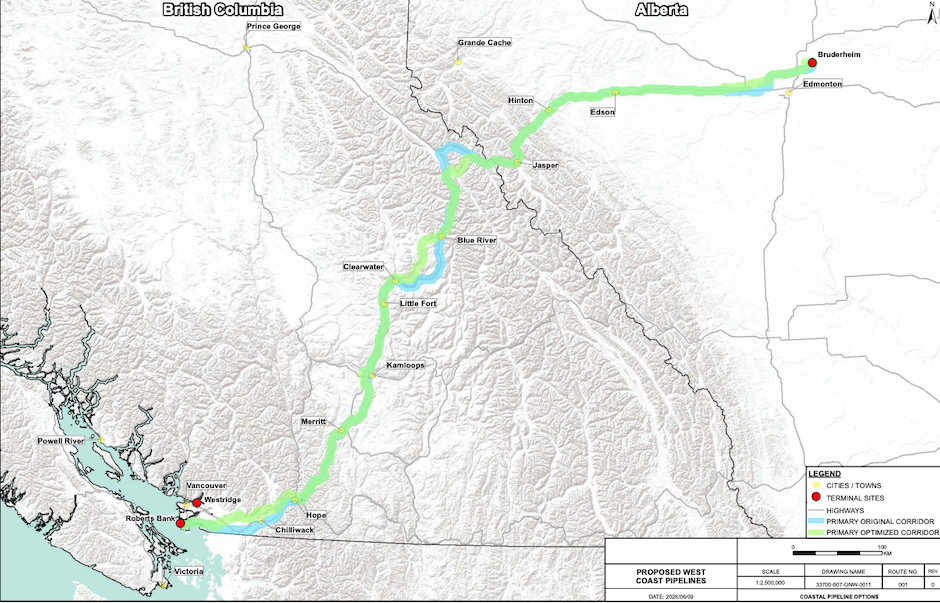
A proposed route for the pipeline, which would largely follow the existing Trans Mountain corridor. Image: Open Alberta, submission to the Major Projects Office
Last weekend, Prime Minister Mark Carney quietly made moves to get the West Coast pipeline listed as a “national interest project” – a move that has met considerable opposition.
Indigenous communities in the province have also been heavily impacted by the wildfires. On Sunday, The Union of BC Indian Chiefs (UBCIC) issued a statement calling on Prime Minister Mark Carney and Alberta Premier Danielle Smith specifically to halt the pipeline.
“This proposal threatens both the inherent rights of First Nations and accelerates the expansion of the fossil fuel industry at a time when communities across the country are already experiencing devastating climate disasters,” the letter reads.
“The UBCIC Chiefs Council expresses alarm about the climate impacts of new oil pipelines and rejects efforts to characterize pipeline expansion as being in the national interest where First Nations title, rights, jurisdiction, and environmental protection would be undermined. Additional pipeline and tanker traffic would expose First Nations lands, waters, marine ecosystems, cultures, economies, and ways of life to unacceptable risks from oil spills, environmental degradation, and accelerating climate change.”
While the federal government pushes ahead with this project, environmental and policy experts are asking whose interest the project is really in.
“People’s homes are burning down, people’s communities are burning down, and the people who still have their homes are dealing with very real health consequences from these fires, so how can you justify a project in that sense?” Tegan Hansen, Stand Earth’s Senior Forest Campaigner told PressProgress.
“‘It’s very telling that we’re seeing the federal government willing to put so many public dollars into building these massive fossil fuel infrastructure projects, and then communities not having the resources to properly prepare for fires and fight fires, and also prepare for other climate impacts like drought and flooding. This is becoming, for many communities, a kind of an all-year situation that they’re having to deal with climate impacts.”
There are currently dozens of active evacuation orders in various parts of the province, mostly in interior BC.
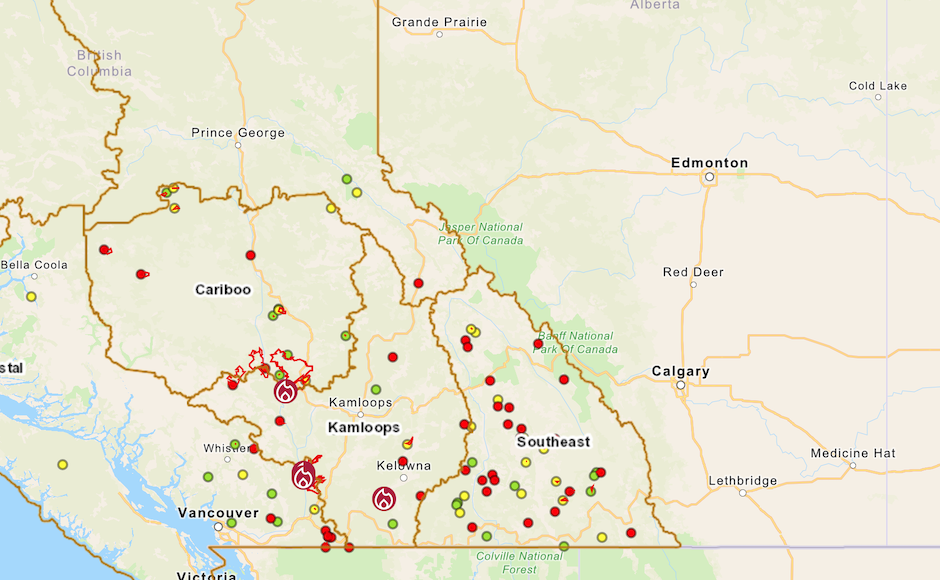
Image: BC Wildfire Service website
“Folks who have been following the predicted impacts of climate change aren’t surprised by what we’re seeing, and it’s coupled with a landscape that’s been so dramatically altered by industrial activity, especially clear cut logging, that’s made forests even more prone to high severity fires being driven by climate change,” Hansen said.
“So we’re really at a point where communities are now facing the brunt of so many bad decisions, and those bad decisions are still being made.”
Hansen recalled protesting the Trans Mountain pipeline construction years ago while Burnaby was similarly covered in smoke.
“We were talking then about seeing the impacts of climate change while trying to stop a major project that would make climate change worse,” Hansen said.
“It is jarring to have not learned those lessons, and now being met with them in such an extreme way.”
BC Premier David Eby has said that while the province will not get involved to try to stop the pipeline project, his government wants to ensure the Northern Tanker Ban — a “federal Canadian law that prohibits oil tankers carrying more than 12,500 metric tons of crude or persistent oil from stopping, loading, or unloading at ports along British Columbia’s north coast,” — will remain in place.
But while the government is, at least on the surface, attempting to stand by certain long standing environmental protections, Anelyse Weiler, a researcher with BC Policy Solutions, said that the protection of workers amid disasters exacerbated by these projects, needs to be taken into account.
“It’s like pouring fuel into flames and instead, lining the pockets of wealthy fossil fuel company CEOs, [when] many of those companies are American-owned. I am puzzled. Why aren’t we prioritizing the needs of everyday people in BC for clean air and good jobs?” Weiler told PressProgress.
According to Weiler, the idea that these fossil fuel infrastructure projects will benefit British Columbians “bears greater scrutiny.”
“It is based on the foundation that there will be trickle down benefits from lining the pockets of already very wealthy corporations, that this will benefit all people in BC, and of course those economic questions are complex,” Weiler said.
“But our research, the work my team and I have done, focuses on workers, and what we’ve seen is that disasters like wildfires really amplify the pre-existing inequalities facing working-class people in BC.”
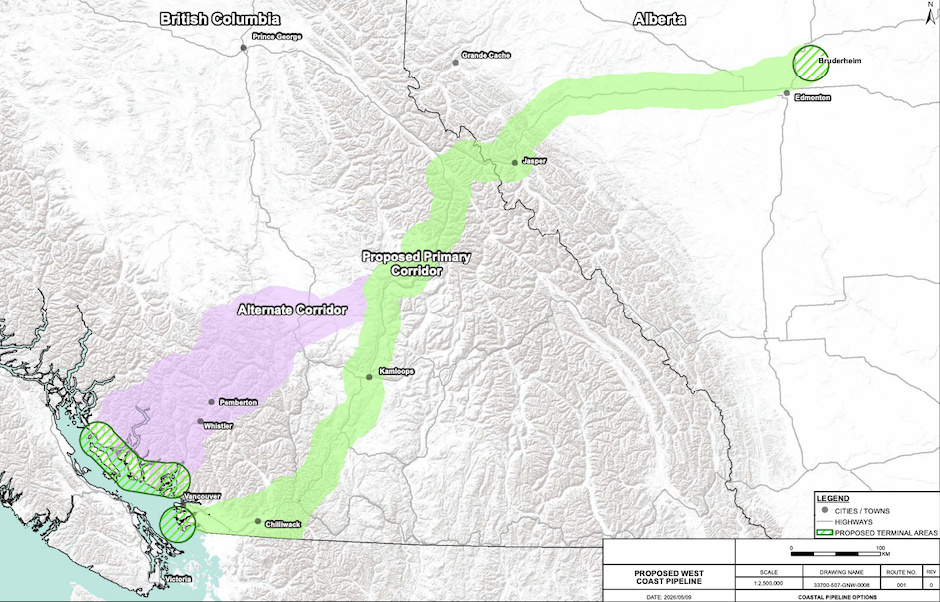
The pipeline’s potential alternative corridor passes through Whistler and Pemberton. Image: Open Alberta, submission to the Major Projects Office
Weiler added that workers and vulnerable communities are an afterthought when it comes to climate-related disasters that are becoming all too common in BC and across the country.
“Migrant workers, for example, low-wage migrant workers are really treated like ghosts in the machine that keeps the Canadian economy running,” she said.
“And when disasters like wildfires occur, the pre-existing inequalities they face, like language barriers to accessing emergency supports, an obligatory relationship of dependency with employers when they are on employer-specific work permits, weak social safety nets, all of those things get exacerbated.”
According to Hansen, it is long overdue for the government to invest in alternatives for fossil fuels and to address the climate crisis year round.
“The solutions already exist, and the money exists to put into those solutions. What we need governments and other investors to do is… to be putting those funds into things like renewable energy, truly renewable energy,” Hansen said.
“We’re falling behind other countries that are making major investments into these renewable energy sources, and those systems are going to give our communities the kind of stability, and also things like energy sovereignty, that we need to withstand the real problems that we’re facing.”
Given that the climate crisis is occurring year round, with summers getting hotter, Weiler said that the BC NDP government should also address protections for workers.
“One of the things that our research is really focused on is the need to update protections for workers in light of these very predictable extreme weather events,” Weiler said.
“Special protections for workers from extreme heat [in BC] have not been updated since 2005. The world has changed a lot since then, but it is a lot hotter. And we’ve seen in the summer of 2021 a record-shattering heat dome from a climate perspective and from a labour perspective, a lot of advocates are saying we need to rewrite workers’ contracts to deal with these recurring crises of climate change.”
Hansen concluded that as everything that makes BC beautiful slowly turns to ash, the province needs to consider “winding down fossil fuel production.”
“There’s no other way we can start meaningfully addressing the impacts of wildfires,” she said. “I think one of the things for us to really hold is that we need to be having these conversations with the same urgency in December and January that we have in July and August.”
—
Correction: An earlier version of this story stated in an image caption that the alternate route would travel through Penticton. The alternate route would instead travel through Pemberton. The updated caption reflects this change.
Our journalism is powered by readers like you.
We’re an award-winning non-profit news organization that covers topics like social and economic inequality, big business and labour, and right-wing extremism.
Help us build so we can bring to light stories that don’t get the attention they deserve from Canada’s big corporate media outlets.
Become a member
 @rumneeek.bsky.social